About Korean Ginseng
Pure natural herbal medicine, Special medicinal herbs
Pure natural herbal medicine, Special medicinal herbs, Korean ginseng

"God's Greatest Gift”
Korean ginseng is loved by people all over the world and far beyond Asia.
Ginseng is a ‘special herb’ that is different from American ginseng or notoginseng and is regarded as a ‘mysterious medicine’ with excellent efficacy enough to be called a cure for all diseases.  
It is the best medicine for all ages, from young children to the elderly. Korean ginseng is the "root of life." It is a pure natural herbal medicine grown in nature that is incredibly effective for stamina and longevity.
In particular, the climate, soil, and devotion from man help it grow, making the quality and benefits of Korean ginseng the best in the world. 

It is recognized for its special value, and is loved by people all over the world.

History of Ginseng
Korean ginseng is famous for being introduced as a new medicine in the ancient medical book of three Asian countries: South Korea, China, and Japan.
Baekje ginseng was also famous during the Three Kingdoms Period (BC 18-668), and it became a major trade item for the Goryeo Dynasty (918-1392). Korean ginseng was named around this time period. Joseon's Korean ginseng was the core of the ginseng road that connected Korea, China, and Japan in the 17th century. Japanese silver and Chinese silk were actively exchanged for Korean ginseng. Many countries, including China and Japan, considered the quality and benefits of Korean ginseng to be the absolute best.
Etymology of Ginseng
In native Korean, ginseng was called ‘Sim’.
Before King Sejong there was no Korean script, so it could not be written in our own way,
but afterwards many Joseon-era documents record ginseng as ‘Sim’.
It is not known exactly
when ginseng cultivation began.
Since the end of the Goryeo Dynasty, wild ginseng became rare and precious due to the increase in the amount of its trade and tax burden.
To solve this problem some people have developed cultivation method of wood-cultivated ginseng that cultivates wild ginseng seeds or mother ginseng artificially, which is the beginning of ginseng cultivation in Korea.
What is ginseng?
‘Ginseng’ refers to plants of the genus Panax in the family Araliaceae.
In 1843 the Russian botanist Carl Anton von Meyer announced the scientific name of Korean ginseng
as Panax ginseng C.A. Meyer, and it has remained in use to this day.
In the scientific name, ‘Pan’ means ‘all’ and ‘Axos’ means ‘cure’,
that is, ginseng is a cure-all medicine,
and ‘ginseng’ is a transcription of the Chinese pronunciation of insam.

Areas with the natural conditions for growing ginseng are East Asia between 85° and 140° east longitude,
and North America between 70° and 97° east longitude.
In latitude they are distributed between 22° and 48°. Korean ginseng lies between 30° and 48° north,
at 33.7°–43.1°, which provides the optimal environmental conditions.

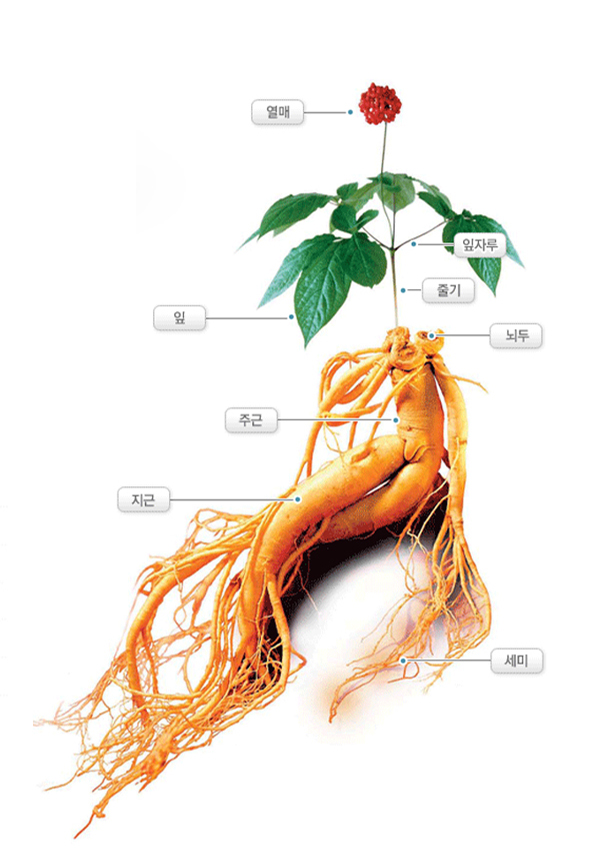
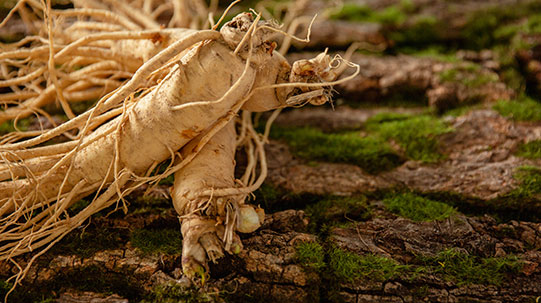
Terms for the parts of ginseng

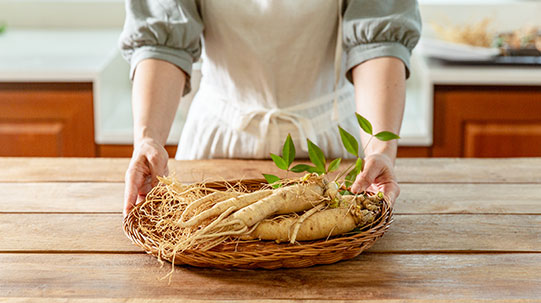
  • Head: the rhizome head (noedu) of the ginseng.
  • Body: the main body or taproot of the ginseng root.
  • Legs: the lateral roots attached to the body.
  • Semi: the fine rootlets attached to the lateral roots.
  • Bonsam: the head, body and legs — that is, the parts excluding the fine rootlets.
img
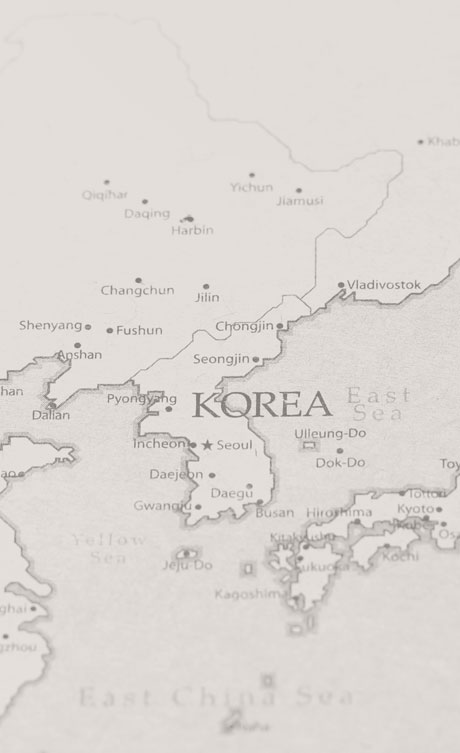
It was during the 18th century that
Korea started to seriously become known
to the international community.
At this time, the representative images of Korea as known to Westerners were
ginseng and hats. In 1737, French geographer Jean Baptiste Bourguignon
d'Anville showed a map of Korea and a picture of a man holding
ginseng while wearing a hat on his head.
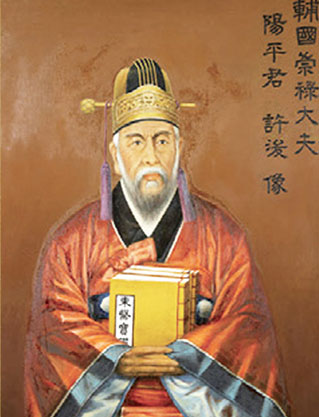
Doctor of Chinese Yang Dynasty
<Hong Kyeong Do 451-536>
“Korean ginseng is effective in prolonging life, is non-toxic, and is the best medicine because it does not harm the human body even after taking it for a long period of time.”
The Most Skilled Doctor of Joseon
<Jun Heo 1546-1615>
“When Jun Heo first saw Korean ginseng, he said it looked like the shape of the human body. Korean ginseng has excellent medicinal benefits and tastes sweet, making it a useful herb that is tasty and non-toxic. It is effective for brightening eyes and improving memory by stabilizing the mind and soul.”
Cultivation Environment
The cultivation area was blessed by Heaven with a wonderful natural environment.
Korean ginseng is made with true sincerity and devotion over a 180-day growth period.

The Reason Why
Korean Ginseng
is the Best
36˚- 38˚
Environment Blessed by Heaven
The optimal latitude for growing ginseng is 33°-43°.
South Korea is located 36 degrees to 38 degrees north latitude, making it a suitable location for ginseng cultivation.
180 Day
Growth Period
The growing period of ginseng in Korea
is about 180 days per year.
Korean ginseng contains many kinds of healthy saponins and is rich in multiple health components.
Personality
Sincerity of a Human
In Korea, ginseng growers select and sow the best ginseng seeds one by one.
Energy from the excellent soil and human devotion help fertilize Korean ginseng.
Nature
True Compliance with Nature
Korean ginseng is planted from seedlings within a year of sowing.
It is moved to the field early so it can grow roots in the soil to absorb more nutrients and harden tissue. Korean ginseng is grown in an environmentally friendly way using as much fertilizer obtained from nature as possible.